Page Guide
Start with the short answer, then follow the mechanism
Refrigeration works by running a refrigerant through a cycle that absorbs heat from inside the cold compartment at low pressure and releases that heat to the room after the refrigerant is compressed to a higher pressure.
These explainers turn common hardware into systems you can reason about instead of just accept as black boxes.
Interactive Explainer
How does refrigeration work?
A refrigerator does not make cold from nothing. It uses work from a compressor to move heat from the inside compartment to the room outside. Refrigerant absorbs heat as it evaporates in one part of the cycle and releases that heat after compression in another part.
Refrigeration is heat moving from one place to another with help from a compression cycle.
The heat taken from your food ends up in the coils and air outside the fridge, plus extra heat from the compressor work itself.
Every door opening lets warm moist room air rush in, forcing the system to remove that heat and moisture again.
Short Answer
Short answer: How does refrigeration work?
Refrigeration works by running a refrigerant through a cycle that absorbs heat from inside the cold compartment at low pressure and releases that heat to the room after the refrigerant is compressed to a higher pressure.
The sections below unpack the main mechanism, the conditions that change the answer, and the follow-up questions readers usually ask next.
Closest next questions: how does wi-fi work?, how does bluetooth work?, how do touchscreens work?
Short answer
A refrigerator does not make cold from nothing. It moves heat from inside the box to the room outside it.
Why the back gets warm
The outside coils release the heat taken from your food plus the extra energy added by the compressor.
Why doors and dust matter
Warm air leaks and blocked coil airflow both increase the amount of heat the cycle must handle.
Also Asked As
Other ways people ask how does refrigeration work
This page is meant to catch the close variants, common misconceptions, and next-step versions of the same question without forcing readers back to search.
Closest dedicated pages: how does wi-fi work?, how does bluetooth work?, how do touchscreens work?
Choose The Closest Version
If your real question branches from here, start with the closest next page
This is the fastest way to keep the visit useful. The answer stays on-topic, and the next click stays close to what the reader actually meant.
A Wi-Fi lab that lets you change closeness, openness, channel crowding, and router quality to compare a strong connection with a frustrating weak one.
If you want the nearby-device radio version How does Bluetooth work?A Bluetooth lab that lets you change distance, interference, battery power, and antenna alignment to compare a stable link with a flaky one.
If you want the screen-sensing version of invisible signals How do touchscreens work?A touchscreen lab that lets you change contact, conductivity, moisture, and barrier thickness to compare reliable taps with missed or noisy touches.
If you want radio waves heating food instead of carrying data How does a microwave work?A microwave lab that lets you change power, water content, thickness, and stirring or resting to compare even heating with frustrating cold centers and hot edges.
Why Trust This Answer
Why trust how does refrigeration work
This sits near the top on purpose so readers can see how the page was reviewed before they decide whether to keep going.
Review summary
How this page was checked
Reviewed against the listed U.S. Department of Energy references for the heat-moving cycle, compressor cooling, and airflow or maintenance explanations used on this page.
Key sources
The first places to check behind this answer
Keep The Question Moving
The next questions readers usually ask from here
This keeps the visit useful instead of one-and-done. You can branch into the next natural follow-up or open the closest dedicated explainer without losing the thread.
Each opening replaces some cold dry air with warmer, often more humid room air, which the appliance has to cool and dehumidify again.
Jump to the FAQIf the condenser cannot reject heat effectively, the refrigeration cycle becomes less efficient and the compressor has to run longer to achieve the same cooling.
Jump to the FAQAn insulation lab that lets you change thickness, trapped air, moisture, and compression to compare a lofty warm barrier with a flattened wet one.
Open explainerA fog lab that lets you change humidity, cooling, wind, and airborne particles to see when clear air crosses the line into a low cloud.
Open explainerMyth Check
Does a refrigerator create cold air?
No. The machine is successful only because it keeps removing heat from the inside faster than heat leaks back in.
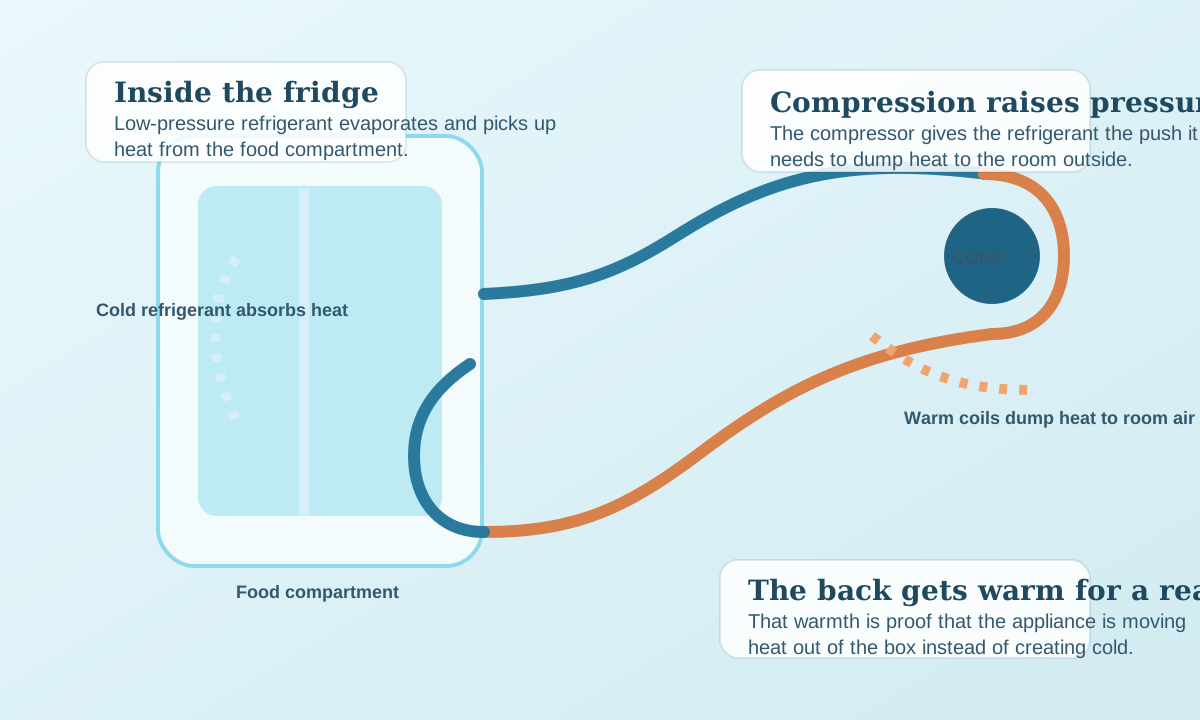
The cold side is really the heat-pickup side
Low-pressure refrigerant evaporates where you want cooling, which is what lets it soak up heat from the compartment and contents.
The warm side proves where the heat went
Condenser coils and nearby air feel warm because that is where the appliance rejects the heat it collected, plus the extra energy added by compressor work.
Try It Yourself
Refrigeration Lab
Increase refrigerant flow, improve coil airflow, or open the door more often to see how indoor heat pickup and outdoor heat dumping must stay balanced.
Move the controls or load a preset to see how the system responds.
What changes the fastest
What is driving the result
The Big Idea
How does refrigeration work
Learn how refrigeration moves heat out of a fridge, why the coils get warm, and why dirty coils or frequent door openings hurt performance.
Cold-side refrigerant absorbs heat
Inside the appliance, refrigerant evaporates at low pressure and takes heat from the food compartment.
The compressor raises pressure
Compression makes the refrigerant hotter and raises its pressure so it can later dump heat to the room.
Outside coils release the heat
Air moving over the condenser coils carries away the heat that was collected inside, plus the extra energy added by compression.
The cycle repeats while loads keep changing
Door openings, warm groceries, frost, and poor airflow all increase the heat and moisture the system must remove.
Follow-Up Answer
Why do dirty coils and frequent door openings hurt fridge performance?
Both problems increase the workload, but in different parts of the cycle.
Frequent openings keep dumping new heat inside
Every open door replaces some cold dry air with warmer, often more humid room air, forcing the system to cool and dehumidify that new load all over again.
Dirty or crowded coils choke the heat dump
If outside airflow is blocked, the condenser side cannot unload heat efficiently. The compressor then has to work harder and longer for the same cooling result.
Good Follow-Up Questions
How does refrigeration work: edge cases and follow-up questions
The short answer helps, but the edge cases, tradeoffs, and scene changes are what usually make the topic memorable.
Cold is the absence of added heat
The refrigerator does not pump cold into the box. It keeps removing heat faster than heat leaks back in.
Outside airflow is part of the cooling system
If condenser airflow is blocked by dust or tight spacing, the appliance struggles to dump heat and the whole cycle becomes less effective.
Moisture becomes part of the workload
Warm room air carries humidity. Every time that air enters, the system has to cool it and often condense or freeze some of its water.
Compare Scenes
A refrigerator works best when heat pickup and heat dumping stay balanced
The same machine can cool smoothly, fight constant warm-air leaks, or struggle because its outside coils cannot shed heat well.
Balanced cycle
A well-ventilated fridge with an unopened door
The compressor and refrigerant cycle can quietly remove the normal heat leak through the walls and keep the compartment stable.
Steady
A well-ventilated fridge with an unopened door
The compressor and refrigerant cycle can quietly remove the normal heat leak through the walls and keep the compartment stable.
Door load
A busy fridge in a busy kitchen
Frequent openings force the system to cool new warm air again and again, raising humidity and increasing frost risk.
Blocked coils
A fridge with poor condenser airflow
Even if the inside cycle is healthy, the system bogs down when the outside coils cannot dump heat efficiently into the room.
Fast Answers
How does refrigeration work? FAQ
Good science pages should answer the obvious follow-ups without making the reader hunt for them.
If your real question is closer to how does wi-fi work?, that page covers the narrower version directly.
If your real question is closer to how does bluetooth work?, that page covers the narrower version directly.
If your real question is closer to how do touchscreens work?, that page covers the narrower version directly.
If your real question is closer to how does a microwave work?, that page covers the narrower version directly.
Trust And Further Reading
Sources and review notes for how does refrigeration work
Reviewed against the listed U.S. Department of Energy references for the heat-moving cycle, compressor cooling, and airflow or maintenance explanations used on this page. This page also links outward to trusted references and inward to nearby explainers on the same topic path.
Editorial review
How this page was reviewed
Reviewed against the listed U.S. Department of Energy references for the heat-moving cycle, compressor cooling, and airflow or maintenance explanations used on this page.
Further reading
Trusted places to continue learning
Stay In This Topic
More from Everyday Engineering
Signals, circuits, refrigeration, and other engineering ideas hiding in ordinary tools and devices.
A battery lab that lets you change chemical strength, charge level, circuit load, and internal resistance to compare a fresh cell with a drained or struggling one.
Everyday Engineering How do microphones work?A microphone lab that lets you change sound level, diaphragm response, magnet strength, and background noise to compare clean voice capture with noisy or overloaded audio.
Everyday Engineering How does a microwave work?A microwave lab that lets you change power, water content, thickness, and stirring or resting to compare even heating with frustrating cold centers and hot edges.
Everyday Engineering How does Wi-Fi work?A Wi-Fi lab that lets you change closeness, openness, channel crowding, and router quality to compare a strong connection with a frustrating weak one.
Related Public Questions
Questions people on the site are also asking
This keeps the explainer connected to the rest of the archive instead of feeling like an isolated page.
No close public question matches are cached yet, but the search page is a good next stop if you want to explore the archive from this starting point.