Page Guide
Start with the short answer, then follow the mechanism
Fog forms when near-ground air reaches saturation and tiny droplets condense into a low cloud around you, usually because the air cooled, gained moisture, or both.
This group stays close to the atmosphere as a moving system, where energy, moisture, and instability change the outcome fast.
Interactive Explainer
What causes fog?
Fog is basically a cloud touching the ground. It forms when near-surface air cools enough or gains enough moisture that water vapor condenses into countless tiny droplets suspended in the air around you.
Fog appears when near-ground air reaches saturation and tiny droplets condense faster than wind can mix them away.
On clear, calm nights the ground can cool quickly, which chills the air just above it and helps radiation fog form by dawn.
A little wind can help mix moisture into a shallow layer, but too much wind usually tears the droplets apart and restores visibility.
Short Answer
Short answer: What causes fog?
Fog forms when near-ground air reaches saturation and tiny droplets condense into a low cloud around you, usually because the air cooled, gained moisture, or both.
The sections below unpack the main mechanism, the conditions that change the answer, and the follow-up questions readers usually ask next.
Closest next questions: what causes lightning?, what causes hail?, how do hurricanes form?
Short answer
Fog is a cloud at ground level made from saturated air and tiny suspended droplets.
Why dawn matters
Radiation fog often peaks near sunrise because the ground has cooled all night.
Why valleys trap it
Cold dense air drains downhill and pools in low terrain, helping a shallow saturated layer persist.
Also Asked As
Other ways people ask what causes fog
This page is meant to catch the close variants, common misconceptions, and next-step versions of the same question without forcing readers back to search.
Closest dedicated pages: what causes lightning?, what causes hail?, how do hurricanes form?
Choose The Closest Version
If your real question branches from here, start with the closest next page
This is the fastest way to keep the visit useful. The answer stays on-topic, and the next click stays close to what the reader actually meant.
A lightning lab that lets you combine updrafts, moisture, ice collisions, and ground connection to see when a storm charges up and finally discharges.
If you want the ice-growth-inside-thunderstorms version What causes hail?A hail lab that lets you change updraft strength, supercooled water, the freezing layer, and collisions to compare small soft pellets with damaging large hail.
If you want the bigger severe-weather setup How do hurricanes form?A hurricane lab that lets you tune ocean heat, moisture, spin, and wind shear to see when a tropical cluster stays messy or becomes a powerful storm.
If you mean what causes tornadoes? What causes tornadoes?A tornado lab that lets you change instability, wind shear, storm rotation, and moisture to see when a supercell begins focusing spin toward the ground.
Why Trust This Answer
Why trust what causes fog
This sits near the top on purpose so readers can see how the page was reviewed before they decide whether to keep going.
Review summary
How this page was checked
Reviewed against the listed NOAA NESDIS and National Weather Service references for the saturation, valley pooling, and sea-fog explanations on this page.
Key sources
The first places to check behind this answer
Keep The Question Moving
The next questions readers usually ask from here
This keeps the visit useful instead of one-and-done. You can branch into the next natural follow-up or open the closest dedicated explainer without losing the thread.
Often yes. Strong wind usually mixes the shallow cool saturated layer with drier air and prevents a dense fog bank from settling in.
Jump to the FAQCold dense air tends to drain downhill and collect in low terrain, making valleys especially good at reaching and holding the saturated layer.
Jump to the FAQA lightning lab that lets you combine updrafts, moisture, ice collisions, and ground connection to see when a storm charges up and finally discharges.
Open explainerA tornado lab that lets you change instability, wind shear, storm rotation, and moisture to see when a supercell begins focusing spin toward the ground.
Open explainerMyth Check
Is fog basically smoke or pollution hanging near the ground?
No. Fog is mostly tiny liquid water droplets. Pollution can provide particles for condensation or worsen visibility, but the essential ingredient is saturated air turning into a low cloud.
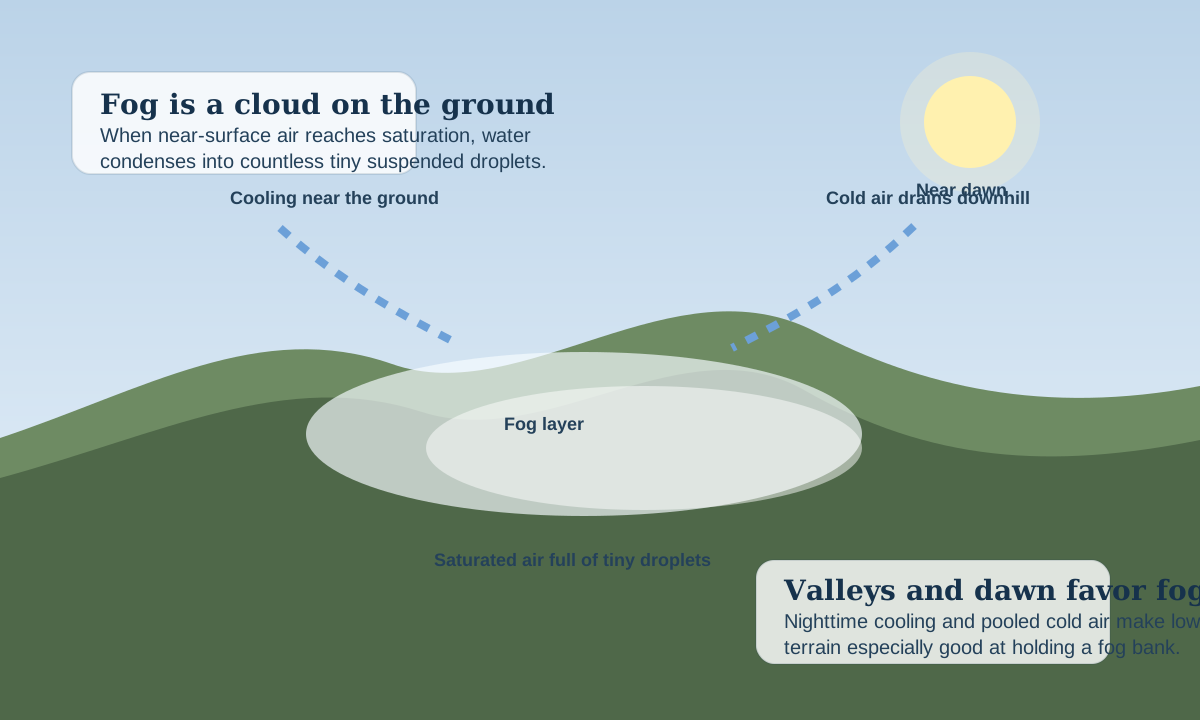
Water makes the cloud
Fog is what happens when near-surface air crosses the saturation line and countless tiny droplets become suspended through the air around you.
Particles can help but do not replace saturation
Microscopic particles often help droplets start, yet without enough cooling or moisture the air will not produce true fog no matter how many particles it contains.
Try It Yourself
Fog Lab
Moisten the air, cool the surface, stir in more particles, or raise the wind to see when fog thickens into a dense bank and when it breaks back into clear air.
Move the controls or load a preset to see how the system responds.
What changes the fastest
What is driving the result
The Big Idea
What causes fog
Learn what causes fog, why it forms near dawn and in valleys, and how wind can build or shred a fog bank. Interactive lab, diagram, and FAQs.
Air has to get close to saturation
Warm air can hold more water vapor than cool air. If near-surface air cools enough or starts nearly full of moisture already, it can reach saturation quickly.
Tiny particles give droplets a place to start
Water vapor condenses more easily when there are microscopic particles to gather around, which helps the first fog droplets form.
Droplets build into a low cloud
Once many tiny droplets are suspended through a shallow layer, the air turns milky and visibility starts falling sharply.
Mixing can either help or destroy the fog
Gentle mixing can deepen a saturated layer, but stronger wind often pulls in drier air or disrupts the shallow cool pool that was sustaining the fog.
Follow-Up Answer
Why is fog often worst near dawn and in valleys?
Both patterns come from how cold air behaves near the ground at night.
Night cooling peaks near sunrise
The ground often reaches its coldest state late in the night, so the air touching it is most likely to hit saturation around dawn rather than right after sunset.
Valleys collect cold dense air
Because cold air drains downhill and pools in low terrain, valleys create natural traps for the shallow cool saturated layer that fog needs.
Good Follow-Up Questions
What causes fog: edge cases and follow-up questions
The short answer helps, but the edge cases, tradeoffs, and scene changes are what usually make the topic memorable.
Fog is often a sunrise story
The coldest part of the night is usually near dawn, so radiation fog often peaks just before or around sunrise and then burns off after the Sun warms the ground.
Cold water can make warm moist air fog instantly
That is a common recipe for sea fog or advection fog: warm humid air glides over a colder surface and the air near the bottom suddenly condenses.
Valleys are natural fog traps
Cold dense air drains downhill and pools in low terrain, which makes valleys especially good at collecting the cool saturated layer fog likes.
Compare Scenes
Why one fog bank is a calm dawn blanket and another rolls in from the coast
The droplets are similar, but the atmosphere reaches saturation in different ways depending on cooling, movement, and geography.
Night cooling builds it
Calm pre-dawn fog
Clear skies and light wind let the ground cool hard overnight, chilling the air above it until droplets condense into a shallow white layer.
Radiation fog
Calm pre-dawn fog
Clear skies and light wind let the ground cool hard overnight, chilling the air above it until droplets condense into a shallow white layer.
Sea fog
Advection fog by the coast
Humid air flows across a colder surface and chills to saturation, creating a fog bank that can drift inland or hang over the water.
Valley fog
Fog trapped in low terrain
Dense chilled air settles into valleys overnight, often producing a striking basin of fog with clearer hills above it.
Breezy clearing
Windy morning breakup
The air may still be humid, but strong enough mixing drags in drier air and tears the shallow fog layer apart before it can thicken.
Fast Answers
What causes fog? FAQ
Good science pages should answer the obvious follow-ups without making the reader hunt for them.
If your real question is closer to what causes lightning?, that page covers the narrower version directly.
If your real question is closer to what causes hail?, that page covers the narrower version directly.
If your real question is closer to how do hurricanes form?, that page covers the narrower version directly.
If your real question is closer to what causes tornadoes?, that page covers the narrower version directly.
Trust And Further Reading
Sources and review notes for what causes fog
Reviewed against the listed NOAA NESDIS and National Weather Service references for the saturation, valley pooling, and sea-fog explanations on this page. This page also links outward to trusted references and inward to nearby explainers on the same topic path.
Editorial review
How this page was reviewed
Reviewed against the listed NOAA NESDIS and National Weather Service references for the saturation, valley pooling, and sea-fog explanations on this page.
Further reading
Trusted places to continue learning
Stay In This Topic
More from Storms and Atmosphere
Wind, lightning, hail, hurricanes, fog, and cloud physics explaining when the atmosphere becomes dramatic.
A climate-balance lab that lets you tune sunlight, greenhouse gases, cloud cover, and reflectivity to see how much heat the surface keeps versus sends back to space.
Storms and Atmosphere What causes tornadoes?A tornado lab that lets you change instability, wind shear, storm rotation, and moisture to see when a supercell begins focusing spin toward the ground.
Storms and Atmosphere How do hurricanes form?A hurricane lab that lets you tune ocean heat, moisture, spin, and wind shear to see when a tropical cluster stays messy or becomes a powerful storm.
Storms and Atmosphere What causes lightning?A lightning lab that lets you combine updrafts, moisture, ice collisions, and ground connection to see when a storm charges up and finally discharges.
Related Public Questions
Questions people on the site are also asking
This keeps the explainer connected to the rest of the archive instead of feeling like an isolated page.
No close public question matches are cached yet, but the search page is a good next stop if you want to explore the archive from this starting point.