Page Guide
Start with the short answer, then follow the mechanism
Hail forms when strong thunderstorm updrafts keep lifting growing ice through regions full of supercooled water, letting the stone add new frozen layers until it becomes too heavy to stay aloft.
This group stays close to the atmosphere as a moving system, where energy, moisture, and instability change the outcome fast.
Interactive Explainer
What causes hail?
Hail forms inside strong thunderstorms when ice embryos get carried upward again and again through regions full of supercooled liquid water. Each trip can add another frozen layer until the stone becomes too heavy for the storm to hold up.
Hail needs a thunderstorm strong enough to keep lifting growing ice through very cold, very wet air.
A hailstone often grows in loops, freezing new coatings each time it passes through a fresh pocket of supercooled water.
Large stones require unusually powerful updrafts, a long growth path, and enough cold air to stop the stone from melting too early.
Short Answer
Short answer: What causes hail?
Hail forms when strong thunderstorm updrafts keep lifting growing ice through regions full of supercooled water, letting the stone add new frozen layers until it becomes too heavy to stay aloft.
The sections below unpack the main mechanism, the conditions that change the answer, and the follow-up questions readers usually ask next.
Closest next questions: what causes lightning?, what causes fog?, how do hurricanes form?
Short answer
Hail needs strong updrafts, supercooled water, and enough cold air to keep an ice embryo growing.
Why layers form
Each trip through a new freezing environment can add another shell to the stone.
Why some hail never makes it down intact
Warm lower air can melt a stone substantially before it reaches the ground.
Also Asked As
Other ways people ask what causes hail
This page is meant to catch the close variants, common misconceptions, and next-step versions of the same question without forcing readers back to search.
Closest dedicated pages: what causes lightning?, what causes fog?, how do hurricanes form?
Choose The Closest Version
If your real question branches from here, start with the closest next page
This is the fastest way to keep the visit useful. The answer stays on-topic, and the next click stays close to what the reader actually meant.
A lightning lab that lets you combine updrafts, moisture, ice collisions, and ground connection to see when a storm charges up and finally discharges.
If your question is really about low clouds at ground level What causes fog?A fog lab that lets you change humidity, cooling, wind, and airborne particles to see when clear air crosses the line into a low cloud.
If you want the bigger severe-weather setup How do hurricanes form?A hurricane lab that lets you tune ocean heat, moisture, spin, and wind shear to see when a tropical cluster stays messy or becomes a powerful storm.
If you mean what causes tornadoes? What causes tornadoes?A tornado lab that lets you change instability, wind shear, storm rotation, and moisture to see when a supercell begins focusing spin toward the ground.
Why Trust This Answer
Why trust what causes hail
This sits near the top on purpose so readers can see how the page was reviewed before they decide whether to keep going.
Review summary
How this page was checked
Reviewed against the listed NOAA NSSL and UCAR references for hail growth, updraft recycling, and layered-stone explanations used on this page.
Key sources
The first places to check behind this answer
Keep The Question Moving
The next questions readers usually ask from here
This keeps the visit useful instead of one-and-done. You can branch into the next natural follow-up or open the closest dedicated explainer without losing the thread.
Yes. Hail forms high inside cold thunderstorm clouds even if the air at ground level feels warm.
Jump to the FAQIf the lower atmosphere is warm enough, stones can melt into raindrops before they finish falling.
Jump to the FAQA lightning lab that lets you combine updrafts, moisture, ice collisions, and ground connection to see when a storm charges up and finally discharges.
Open explainerA tornado lab that lets you change instability, wind shear, storm rotation, and moisture to see when a supercell begins focusing spin toward the ground.
Open explainerMyth Check
Is hail just frozen rain?
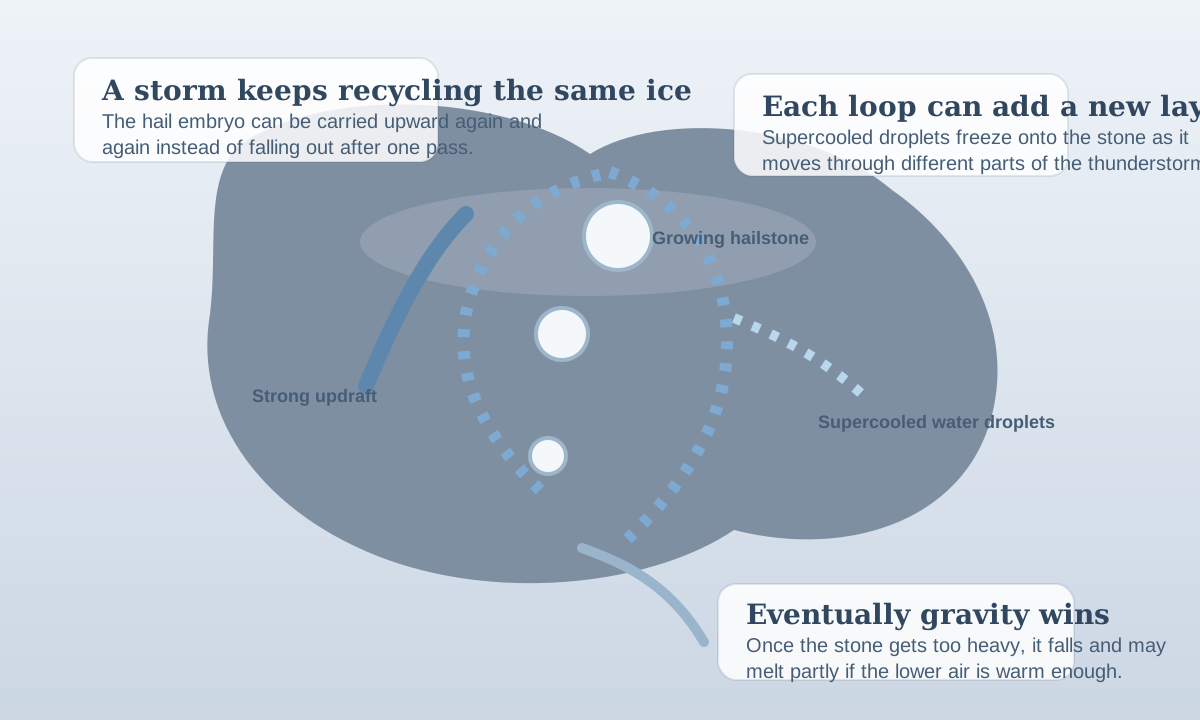
Not really. Hail usually grows through repeated storm recycling, which is why it often has a layered internal history instead of being a single raindrop that froze once.
The updraft keeps the story going
Without a powerful updraft, the ice particle falls out too early and stays small. Big hail is mostly a storm-lift story before it is a ground-impact story.
Supercooled droplets are the growth fuel
Liquid droplets can remain below freezing inside the storm. When they strike the ice embryo, they freeze and help the hailstone build another layer.
Try It Yourself
Hail Growth Lab
Strengthen the updraft, deepen the freezing layer, or add more supercooled water to see when a soft pellet becomes a layered hailstone with real damaging potential.
Move the controls or load a preset to see how the system responds.
What changes the fastest
What is driving the result
The Big Idea
What causes hail
Learn what causes hail, how hailstones grow in layers inside thunderstorms, and why some stones melt before reaching the ground. Interactive explainer and FAQs.
A storm first makes a small ice embryo
Frozen raindrops, graupel, or tiny ice particles provide the first solid core a hailstone can build around.
The updraft throws the embryo upward
A strong thunderstorm can keep lifting the growing stone back into colder, wetter parts of the cloud instead of letting it fall out immediately.
Supercooled droplets freeze onto the stone
Liquid water can exist below freezing inside storm clouds. When it hits the ice embryo, it freezes and thickens the hailstone.
Eventually the storm loses the battle
Once the hailstone becomes too heavy, or the updraft weakens, the stone falls toward the ground and may melt partly on the way down.
Follow-Up Answer
Why do hailstones have layers, and why do some melt before landing?
Those two details come from different parts of the hailstone's trip through the atmosphere.
Layers record repeated passes through the storm
Each loop through colder or wetter parts of the cloud can freeze a new coating with a slightly different texture, leaving the hailstone with rings that tell part of its growth history.
The lower atmosphere decides the final version you see
Even a large stone formed high aloft can shrink, soften, or disappear entirely if the air below the storm is warm enough for melting to win on the descent.
Good Follow-Up Questions
What causes hail: edge cases and follow-up questions
The short answer helps, but the edge cases, tradeoffs, and scene changes are what usually make the topic memorable.
Large hail is mostly an updraft story
A storm needs strong vertical motion to keep recycling the stone long enough for major growth.
A hailstone records its own history
Cutting one open often reveals layers that reflect different freezing conditions during repeated trips through the storm.
Surface damage and storm strength are not perfectly matched
A severe storm can still produce smaller hail if the lower atmosphere melts the stones before they reach the ground.
Compare Scenes
The same thunderstorm can produce very different hail outcomes
The size depends on how often the stone gets recycled and how much melting happens before it falls out.
Short trip
A weak storm making soft ice
The storm can freeze small pellets, but the updraft is not strong enough to recycle them many times.
Small pellet
A weak storm making soft ice
The storm can freeze small pellets, but the updraft is not strong enough to recycle them many times.
Severe hail
A storm growing large hailstones
Strong lift and plenty of supercooled water keep sending the stone through fresh growth zones.
Melting descent
Hail shrinking before it lands
The stone forms aloft, but a shallow cold layer means melting takes over during the descent.
Fast Answers
What causes hail? FAQ
Good science pages should answer the obvious follow-ups without making the reader hunt for them.
If your real question is closer to what causes lightning?, that page covers the narrower version directly.
If your real question is closer to what causes fog?, that page covers the narrower version directly.
If your real question is closer to how do hurricanes form?, that page covers the narrower version directly.
If your real question is closer to what causes tornadoes?, that page covers the narrower version directly.
Trust And Further Reading
Sources and review notes for what causes hail
Reviewed against the listed NOAA NSSL and UCAR references for hail growth, updraft recycling, and layered-stone explanations used on this page. This page also links outward to trusted references and inward to nearby explainers on the same topic path.
Editorial review
How this page was reviewed
Reviewed against the listed NOAA NSSL and UCAR references for hail growth, updraft recycling, and layered-stone explanations used on this page.
Further reading
Trusted places to continue learning
Stay In This Topic
More from Storms and Atmosphere
Wind, lightning, hail, hurricanes, fog, and cloud physics explaining when the atmosphere becomes dramatic.
A cloud lab that lets you change updrafts, droplet size, humidity, and cooling to see when a cloud stays aloft and when it starts to fall out as rain.
Storms and Atmosphere Why does frost form?A frost lab that lets you change air cold, surface cold, humidity, and calm conditions to compare a white crystalline coating with no lasting frost at all.
Storms and Atmosphere What is the greenhouse effect?A climate-balance lab that lets you tune sunlight, greenhouse gases, cloud cover, and reflectivity to see how much heat the surface keeps versus sends back to space.
Storms and Atmosphere What causes fog?A fog lab that lets you change humidity, cooling, wind, and airborne particles to see when clear air crosses the line into a low cloud.
Related Public Questions
Questions people on the site are also asking
This keeps the explainer connected to the rest of the archive instead of feeling like an isolated page.
No close public question matches are cached yet, but the search page is a good next stop if you want to explore the archive from this starting point.