Page Guide
Start with the short answer, then follow the mechanism
The ocean looks blue mainly because water absorbs reds and oranges faster than blue light, so the wavelengths most likely to survive and return to your eyes are weighted toward blue.
These pages stay close to water as a system: what it absorbs, what it reflects, how it moves, and what that changes for the rest of the planet.
Interactive Explainer
Why is the ocean blue?
Because water does not treat every color of sunlight equally. In clear, deep water, reds and oranges get removed quickly, while blue light is much more likely to survive the trip back out to your eyes. Then things like sand, plankton, bubbles, and river sediment remix the color again.
Clear deep water usually looks blue because water absorbs warm colors faster than blue.
The sky can tint the surface, but it is not the main reason the whole ocean looks blue.
Shallow sand, algae, and muddy runoff can push water toward turquoise, green, gray, or brown.
Short Answer
Short answer: Why is the ocean blue?
The ocean looks blue mainly because water absorbs reds and oranges faster than blue light, so the wavelengths most likely to survive and return to your eyes are weighted toward blue.
The sections below unpack the main mechanism, the conditions that change the answer, and the follow-up questions readers usually ask next.
Closest next questions: what causes tides?, why is the ocean salty?, why does ice float?
Short answer
Pure water removes warm colors quickly, which is why clear deep water tends to look blue rather than red or yellow.
Why tropical water looks turquoise
Shallow clear water over pale sand or reef sends more light back upward, mixing bright bottom reflection with blue-biased water.
Why coasts can look green or brown
Phytoplankton, sediment, bubbles, and dissolved material can overpower the clean deep-water blue signal.
Also Asked As
Other ways people ask why is the ocean blue
This page is meant to catch the close variants, common misconceptions, and next-step versions of the same question without forcing readers back to search.
Closest dedicated pages: what causes tides?, why is the ocean salty?, why does ice float?
Choose The Closest Version
If your real question branches from here, start with the closest next page
This is the fastest way to keep the visit useful. The answer stays on-topic, and the next click stays close to what the reader actually meant.
A tide lab that lets you combine lunar pull, solar alignment, and coastline shape to see why some places have tiny tides and others have huge ones.
If you want the Salinity lab angle first Why is the ocean salty?A salinity lab that lets you mix river minerals, evaporation, fresh water, and seafloor chemistry to see how salt levels change.
If you want the Density lab angle first Why does ice float?An ice-buoyancy lab that lets you vary temperature, salinity, pressure, and lattice openness to compare lake ice, sea ice, slush, and dense high-pressure ice.
Why Trust This Answer
Why trust why is the ocean blue
This sits near the top on purpose so readers can see how the page was reviewed before they decide whether to keep going.
Review summary
How this page was checked
Reviewed against listed NOAA and NASA ocean-color explainers for the main absorption, plankton, sediment, and shallow-water color claims.
Key sources
The first places to check behind this answer
Keep The Question Moving
The next questions readers usually ask from here
This keeps the visit useful instead of one-and-done. You can branch into the next natural follow-up or open the closest dedicated explainer without losing the thread.
Phytoplankton, dissolved material, bubbles, and suspended sediment all change which wavelengths are absorbed and scattered back out of the water. That can shift the color toward green, gray, or brown.
Jump to the FAQYes. Changes in ocean color can reveal phytoplankton blooms, river runoff, sediment plumes, and other signals that help scientists study ecosystems, fisheries, and water quality.
Jump to the FAQA tide lab that lets you combine lunar pull, solar alignment, and coastline shape to see why some places have tiny tides and others have huge ones.
Open explainerA salinity lab that lets you mix river minerals, evaporation, fresh water, and seafloor chemistry to see how salt levels change.
Open explainerMyth Check
Is the ocean blue only because it reflects the sky?
No. Reflection can brighten the surface and add sparkle, but clear deep water stays blue mainly because water absorbs warm wavelengths faster than blue.
Why reflection is not enough
The sea still looks blue from many viewing angles, in many weather conditions, and far from any dramatic mirror-like patch of sky. That is a clue that something deeper than simple reflection is happening.
Water itself selectively removes red and orange wavelengths, so the returning light is weighted toward blue and blue-green.
Why the myth survives
A glossy water surface absolutely can reflect the sky, especially in bright glints and low-angle views. The mistake is treating that visible surface effect as the whole explanation.
If you want the scattering version of the story, open why is the sky blue? and compare the two mechanisms side by side.
Try It Yourself
Ocean Lab
Deepen the water, add a plankton bloom, stir up sediment, or brighten the surface glare to see how the ocean color shifts from sapphire to turquoise, green, or muddy brown.
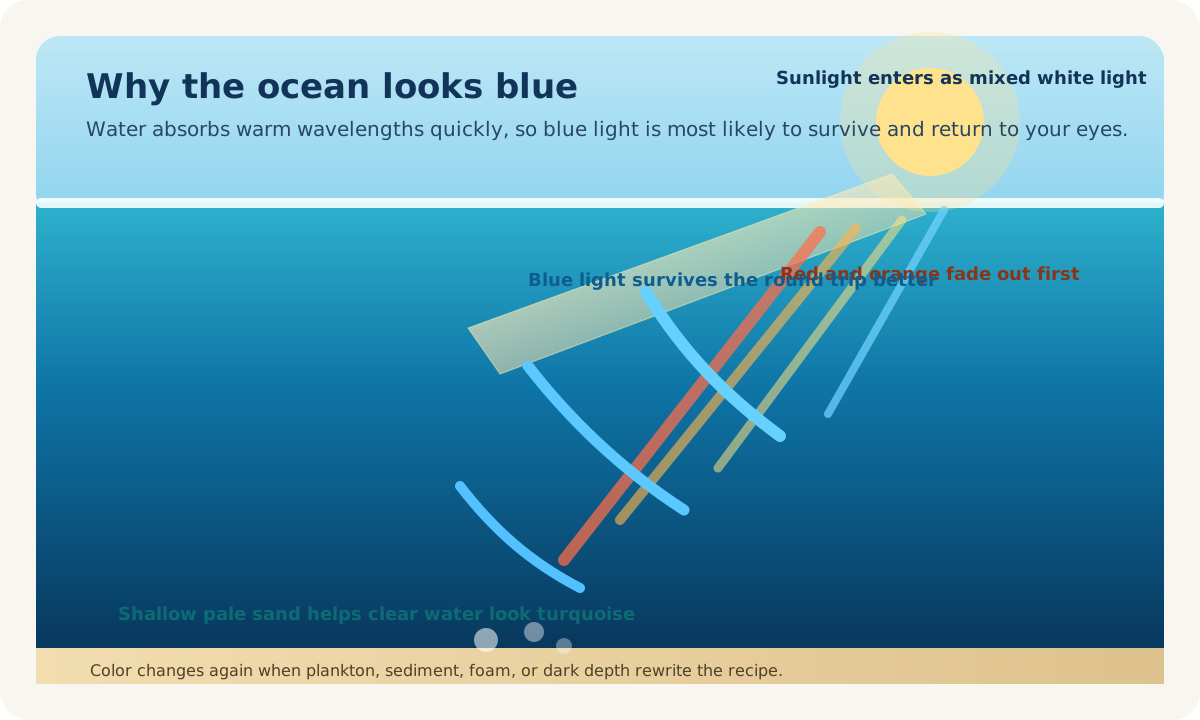
In deep, fairly clear water, reds and oranges are removed quickly while blue light is much more likely to survive the trip back out of the water.
Light returning to your eye
What is shaping the color?
The Big Idea
Why is the ocean blue
Ocean blue is not a single effect. It is the result of sunlight entering water, losing some wavelengths faster than others, and then being modified by whatever else is in the scene.
Sunlight arrives mixed
Sunlight starts out as a blend of visible wavelengths, from long red wavelengths to shorter blue wavelengths.
Water removes warm colors quickly
As light travels through water, reds and oranges get absorbed much sooner than blue, so they fade out first.
Blue survives the round trip better
In clear deeper water, blue light has the best chance of making it back out of the water column and into your eyes.
Other ingredients rewrite the palette
Plankton, sediment, bubbles, dissolved matter, and bright sand can all push that basic blue recipe toward turquoise, green, gray, or brown.
Follow-Up Answer
Why is tropical water turquoise instead of deep blue?
Turquoise water usually means the scene is shallow, bright, and clear enough for the seafloor to join the color recipe.
Shallow bottoms send more light back
In a tropical lagoon or reef flat, sunlight can hit pale sand or coral and bounce back upward before the water has time to absorb as much of it. That makes the water look brighter and more cyan than deep offshore water.
The effect is strongest when the water is clear enough for you to still “see” the bottom optically even if you cannot make out every detail.
Clear water keeps the color vivid
Suspended mud and dense plankton blooms tend to mute or green the scene. Turquoise needs relatively clear water, because too many extra particles start rewriting the palette.
That is why the same coastline can flip from luminous blue-green to dull brown after storms or river runoff.
Turquoise is a clue, not a separate physics system
The water is still filtering warm wavelengths. You are just seeing that blue-biased water mixed with strong bottom reflection, which pushes the final look toward aquamarine instead of dark cobalt.
The water-comparison section below shows how that turquoise recipe differs from plankton-rich green water and sediment-heavy runoff.
Helpful Distinction
Why ocean blue and sky blue are not the same phenomenon
Both often look blue, but they arrive there for different physical reasons. That is why linking the two questions together makes sense, but treating them as identical does not.
The sky
The sky is mainly a scattering story. Tiny air molecules redirect short wavelengths especially efficiently, so blue light is spread all across the dome above you.
Open the sky explainerThe ocean
The ocean is mainly an absorption-and-return story. Water removes reds and oranges quickly, and the wavelengths most likely to come back out are weighted toward blue and blue-green.
Surface reflection matters some, especially in glittering highlights, but it is not the whole explanation.
Where people get tripped up
The surface can absolutely mirror the sky in small patches. But if reflection were the whole answer, clear water would not stay blue under many different viewing angles, depths, and lighting conditions.
That is why shallow sandbars, algal blooms, and muddy runoff can all overpower the simple "blue sky reflected down" idea.
Compare Scenes
Why different water bodies look so different
The same sunlight can produce very different colors depending on depth, biology, dissolved material, and what lies under the water.
Clear, deep water
Deep open ocean
Far from shore, the water can be deep and comparatively low in suspended sediment. That gives pure water absorption a stronger voice, so the color often reads as rich cobalt or ultramarine.
Clear, deep water
Deep open ocean
Far from shore, the water can be deep and comparatively low in suspended sediment. That gives pure water absorption a stronger voice, so the color often reads as rich cobalt or ultramarine.
Shallow bright water
Tropical shallows
Clear shallow water over pale sand or reef lets lots of light bounce back upward. The result is often a luminous turquoise rather than the darker blue of the open ocean.
Biology takes over
Plankton bloom
When the water is packed with phytoplankton and their pigments, the color often shifts toward green. Satellites watch these color changes because they can reveal biological activity over huge areas.
Sediment-rich water
River plume
After runoff or storms, fine mineral particles and dissolved material can overwhelm the clean blue signal. The water often turns brown, tan, or dull green because so many extra particles are scattering the light.
Fast Answers
Why is the ocean blue? FAQ
The best short answer is useful, but the follow-up questions are where ocean color starts to feel vivid and real.
If you are really asking about what causes tides?, that explainer keeps the intent tighter.
If you are really asking about why is the ocean salty?, that explainer keeps the intent tighter.
If you are really asking about why does ice float?, that explainer keeps the intent tighter.
Keep Exploring
Have another color question?
Follow the blue theme into the sky, search public science questions, or ask your own question and start a fresh thread.
Trust And Further Reading
Sources and review notes for why is the ocean blue
Reviewed against listed NOAA and NASA ocean-color explainers for the main absorption, plankton, sediment, and shallow-water color claims. This page also links outward to trusted references and inward to nearby explainers on the same topic path.
Editorial review
How this page was reviewed
Reviewed against listed NOAA and NASA ocean-color explainers for the main absorption, plankton, sediment, and shallow-water color claims.
Further reading
Trusted places to continue learning
Stay In This Topic
More from Oceans and Water
Ocean color, salinity, tides, and buoyancy explaining why water behaves so differently from the air above it.
A tide lab that lets you combine lunar pull, solar alignment, and coastline shape to see why some places have tiny tides and others have huge ones.
Oceans and Water Why is the ocean salty?A salinity lab that lets you mix river minerals, evaporation, fresh water, and seafloor chemistry to see how salt levels change.
Oceans and Water Why does ice float?An ice-buoyancy lab that lets you vary temperature, salinity, pressure, and lattice openness to compare lake ice, sea ice, slush, and dense high-pressure ice.
Related Public Questions
Questions people on the site are also asking
This keeps the explainer connected to the rest of the archive instead of feeling like an isolated page.
No close public question matches are cached yet, but the search page is a good next stop if you want to explore the archive from this starting point.