Page Guide
Start with the short answer, then follow the mechanism
Grass is green because chlorophyll absorbs red and blue light especially well for photosynthesis while more green light is reflected or scattered back toward your eyes.
These topics make biology feel less abstract by anchoring it in colors, growth, and changes you can see without a microscope.
Interactive Explainer
Why is grass green?
Grass looks green mainly because of chlorophyll. That pigment is excellent at absorbing red and blue light for photosynthesis, while a lot of green wavelengths are reflected or scattered back out toward your eyes.
Grass is green because chlorophyll absorbs red and blue light better than green light.
If chlorophyll breaks down or the plant is stressed, the blade can turn pale, yellow, or brown instead of deep green.
The pigment is doing its job with incoming light, so the look of grass depends both on the pigment and on the light hitting it.
Short Answer
Short answer: Why is grass green?
Grass is green because chlorophyll absorbs red and blue light especially well for photosynthesis while more green light is reflected or scattered back toward your eyes.
The sections below unpack the main mechanism, the conditions that change the answer, and the follow-up questions readers usually ask next.
Closest next questions: why do leaves change color?, how does photosynthesis work?, why is the sky blue?
Short answer
Chlorophyll is the main pigment behind the green appearance of healthy grass.
Why green can fade
Stress, drought, disease, and nutrient problems can break down chlorophyll and push the blades toward yellow or brown.
Why light still matters
The color depends both on the pigment in the blade and on the light the blade is receiving.
Also Asked As
Other ways people ask why is grass green
This page is meant to catch the close variants, common misconceptions, and next-step versions of the same question without forcing readers back to search.
Closest dedicated pages: why do leaves change color?, how does photosynthesis work?, why is the sky blue?
Choose The Closest Version
If your real question branches from here, start with the closest next page
This is the fastest way to keep the visit useful. The answer stays on-topic, and the next click stays close to what the reader actually meant.
A fall-color lab that lets you change day length, cool nights, sunny afternoons, and stress to watch pigments take over a leaf canopy.
If you want the energy-making story under the colors How does photosynthesis work?A photosynthesis lab that lets you change sunlight, carbon dioxide, water, and leaf temperature to see what limits sugar production.
If you mean why is the sky blue? Why is the sky blue?A live sky simulator, a clear explanation of Rayleigh scattering, and a comparison with the Moon and Mars.
If you mean why does bread rise? Why does bread rise?A bread lab that lets you tune yeast activity, warmth, hydration, and gluten strength to see when gas gets trapped and when the dough spreads instead of rising.
Why Trust This Answer
Why trust why is grass green
This sits near the top on purpose so readers can see how the page was reviewed before they decide whether to keep going.
Review summary
How this page was checked
Reviewed against the listed Ask A Biologist and Khan Academy references for the chlorophyll, reflection, and pigment-breakdown explanations used on this page.
Key sources
The first places to check behind this answer
Keep The Question Moving
The next questions readers usually ask from here
This keeps the visit useful instead of one-and-done. You can branch into the next natural follow-up or open the closest dedicated explainer without losing the thread.
Different species and growing conditions affect pigment concentration, blade thickness, and how the leaf reflects light.
Jump to the FAQUsually it is a good sign, but color alone does not prove perfect health. Roots, water status, and disease still matter.
Jump to the FAQA photosynthesis lab that lets you change sunlight, carbon dioxide, water, and leaf temperature to see what limits sugar production.
Open explainerA fall-color lab that lets you change day length, cool nights, sunny afternoons, and stress to watch pigments take over a leaf canopy.
Open explainerMyth Check
Is grass green because plants use only green light?
No. Plants still interact with green light. Grass just reflects enough of it that green dominates the visual impression reaching your eyes.
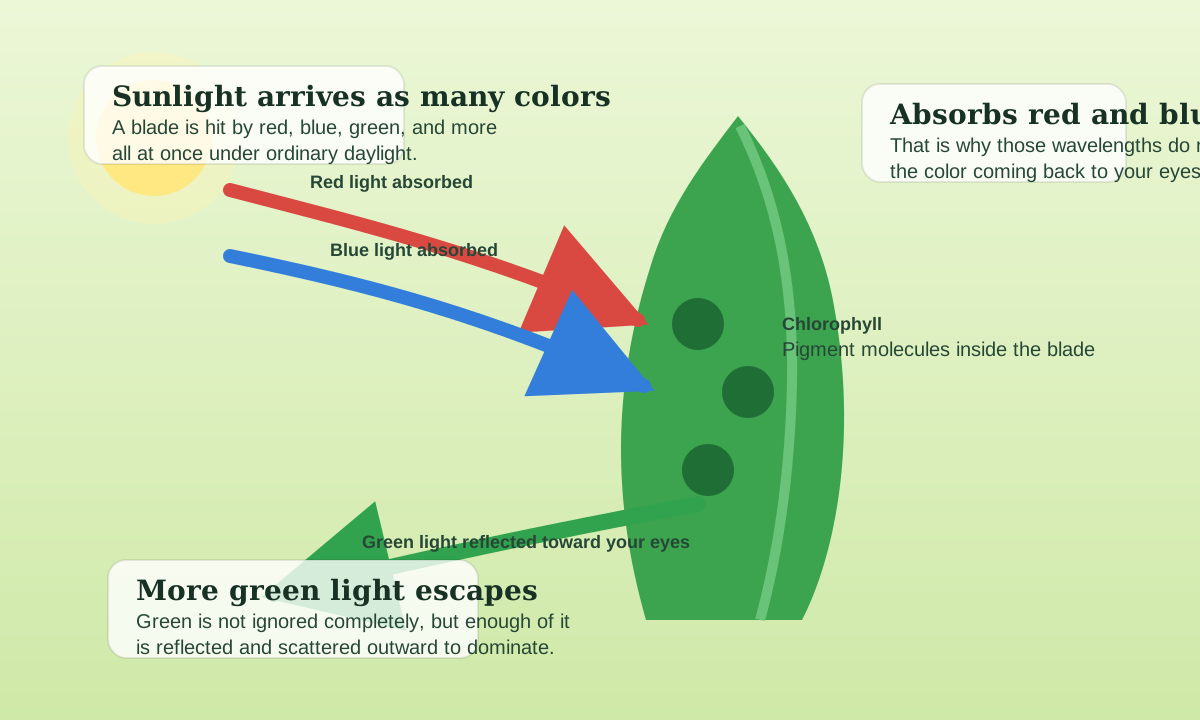
Green is the leftover color
Chlorophyll is especially effective at absorbing red and blue wavelengths, so green is the part of the visible spectrum most likely to come back out of the blade toward you.
Pigment chemistry drives the look
The lawn does not need green paint from the sky or soil. The color is built by pigments inside the living leaf tissue and shaped by the plant’s condition.
Try It Yourself
Grass Color Lab
Boost chlorophyll and nutrients or add stress and shade to see when grass looks lush green, pale, or browned out.
Move the controls or load a preset to see how the system responds.
What changes the fastest
What is driving the result
The Big Idea
Why is grass green
Learn why grass looks green, how chlorophyll drives the color, and why stress can turn blades pale, yellow, or brown. Interactive lab, diagram, and FAQs.
Grass builds chlorophyll in its blades
Chlorophyll pigments sit inside chloroplasts and give the blade its dominant green appearance.
The pigment absorbs red and blue light well
Those wavelengths are especially useful for the chemistry of photosynthesis, so they are absorbed rather than reflected strongly.
More green light escapes the blade
Because green wavelengths are not absorbed as strongly, more of that light is reflected or scattered back toward your eyes.
Stress can change the color story
If chlorophyll drops, tissues dry out, or nutrients run short, the blade stops looking richly green and can shift toward pale yellow or brown.
Follow-Up Answer
Why does green grass turn yellow or brown?
Once chlorophyll breaks down or the blade is badly stressed, other pigments or dead tissue start taking over the visual story.
Less chlorophyll means less green
Drought, nutrient shortages, disease, and seasonal dormancy can reduce chlorophyll faster than the plant can replace it, so the blades stop reflecting that rich green look.
Brown often means structure is failing too
At that point the issue is not just pigment. Drying and tissue damage change how the blade absorbs and scatters light, so the whole patch can look straw-colored or brown.
Good Follow-Up Questions
Why is grass green: edge cases and follow-up questions
The short answer helps, but the edge cases, tradeoffs, and scene changes are what usually make the topic memorable.
Green does not mean unused by the plant
Plants still interact with green light, but chlorophyll reflects enough of it that green dominates the visual impression.
A lawn can change color before it dies
Stress often shows up visually as a pigment change before a blade is completely dead.
Healthy green depends on both pigment and condition
Grass needs chlorophyll, but it also needs enough light, water, and nutrients to keep producing and maintaining that pigment.
Compare Scenes
The same species of grass can look dramatically different depending on pigment and stress
The visible color changes when the plant is either maintaining chlorophyll well or letting it break down.
Pigment maintained
A deep green healthy lawn
Chlorophyll levels are high, nutrients are available, and the grass is reflecting plenty of green light back to the eye.
Healthy
A deep green healthy lawn
Chlorophyll levels are high, nutrients are available, and the grass is reflecting plenty of green light back to the eye.
Shade
A paler shaded patch
The grass can stay alive and greenish, but limited light and slower growth make the color look less vivid.
Drought
Grass losing its green
Stress and poor support are eroding pigment and pushing the blades toward yellowing or brown dormancy.
Fast Answers
Why is grass green? FAQ
Good science pages should answer the obvious follow-ups without making the reader hunt for them.
If your real question is closer to why do leaves change color?, that page covers the narrower version directly.
If your real question is closer to how does photosynthesis work?, that page covers the narrower version directly.
If your real question is closer to why is the sky blue?, that page covers the narrower version directly.
If your real question is closer to why does bread rise?, that page covers the narrower version directly.
Trust And Further Reading
Sources and review notes for why is grass green
Reviewed against the listed Ask A Biologist and Khan Academy references for the chlorophyll, reflection, and pigment-breakdown explanations used on this page. This page also links outward to trusted references and inward to nearby explainers on the same topic path.
Editorial review
How this page was reviewed
Reviewed against the listed Ask A Biologist and Khan Academy references for the chlorophyll, reflection, and pigment-breakdown explanations used on this page.
Further reading
Trusted places to continue learning
Stay In This Topic
More from Plants and Life
Pigments, seasons, bread, leaves, and photosynthesis connecting living systems to observable changes.
A bread lab that lets you tune yeast activity, warmth, hydration, and gluten strength to see when gas gets trapped and when the dough spreads instead of rising.
Plants and Life How does photosynthesis work?A photosynthesis lab that lets you change sunlight, carbon dioxide, water, and leaf temperature to see what limits sugar production.
Plants and Life Why do leaves change color?A fall-color lab that lets you change day length, cool nights, sunny afternoons, and stress to watch pigments take over a leaf canopy.
Related Public Questions
Questions people on the site are also asking
This keeps the explainer connected to the rest of the archive instead of feeling like an isolated page.
No close public question matches are cached yet, but the search page is a good next stop if you want to explore the archive from this starting point.